tel: +44 (0)330 100 0377
13 August 2026
Rapid-response ground protection and temporary access supporting the Lewes rail recovery operation
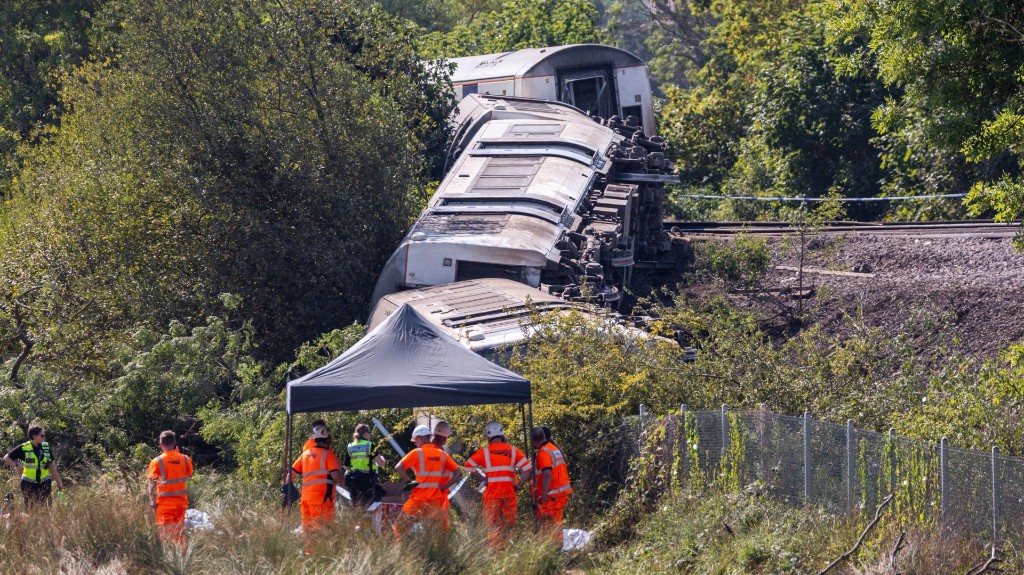
When a passenger train derailed near Lewes in August 2026, Notus Ground Safe was called in at short notice to provide the ground protection and temporary access infrastructure the wider recovery operation needed. Within hours, our team mobilised with trackway panels, plant and crew to build a load-bearing access road and working compound for cranes, recovery vehicles and heavy plant — the access layer that had to be in place before specialist recovery work could begin.
Shortly before 15:54 BST on 13 August 2026, the 14:24 service from London Victoria to Eastbourne derailed between Cooksbridge and Lewes, just north of Lewes Tunnel. Three of the train's eight carriages left the track and came to rest on their sides on the embankment. Eighteen people were injured, two seriously. Passengers described being trapped inside carriages that had toppled onto their sides. Around 150 people had been travelling on the service, which was evacuated after British Transport Police declared a major incident.
Pictures from the scene showed carriages from a Southern-liveried Electrostar train — modern rolling stock built between 2001 and 2014 that held together relatively well in the derailment. That resilience limited the scale of injuries, but it did nothing to simplify the job of getting the line running again. Network Rail confirmed that the Lewes to Haywards Heath line would remain closed for at least ten days while a major recovery operation got underway.
Recovering three derailed carriages from an embankment is not something that can be done with the machinery already on hand. It requires heavy cranes, specialist recovery vehicles, and — critically — ground that can bear their weight without turning the site into a second hazard. That is where temporary ground protection and load-bearing access become essential, and where Notus Ground Safe was brought in to support the wider response.
Rail recovery at this scale depends on getting the right equipment to the right place on ground that can support it. Cranes, recovery vehicles and heavy plant cannot simply move across unsuitable or unprepared ground without appropriate access infrastructure, risking further ground damage or destabilising the area around the incident.
For operations like this, a stable temporary access road and a properly laid working compound are not optional extras. They are the foundation for crane positioning, vehicle marshalling, and the sequenced lifting work that follows. Without suitable ground protection and a reliable trackway hire solution, the recovery teams responsible for lifting carriages and reopening the railway cannot work safely or efficiently.
Notus Ground Safe's role was to provide that access infrastructure — not to recover the train, lift the carriages, repair the railway, or lead the incident response. Our scope was ground protection and temporary access supporting the wider rail recovery effort.
The call came with no warning and no lead time. Within hours of being asked to help, the team had mobilised to site with trackway panels, plant and crew.
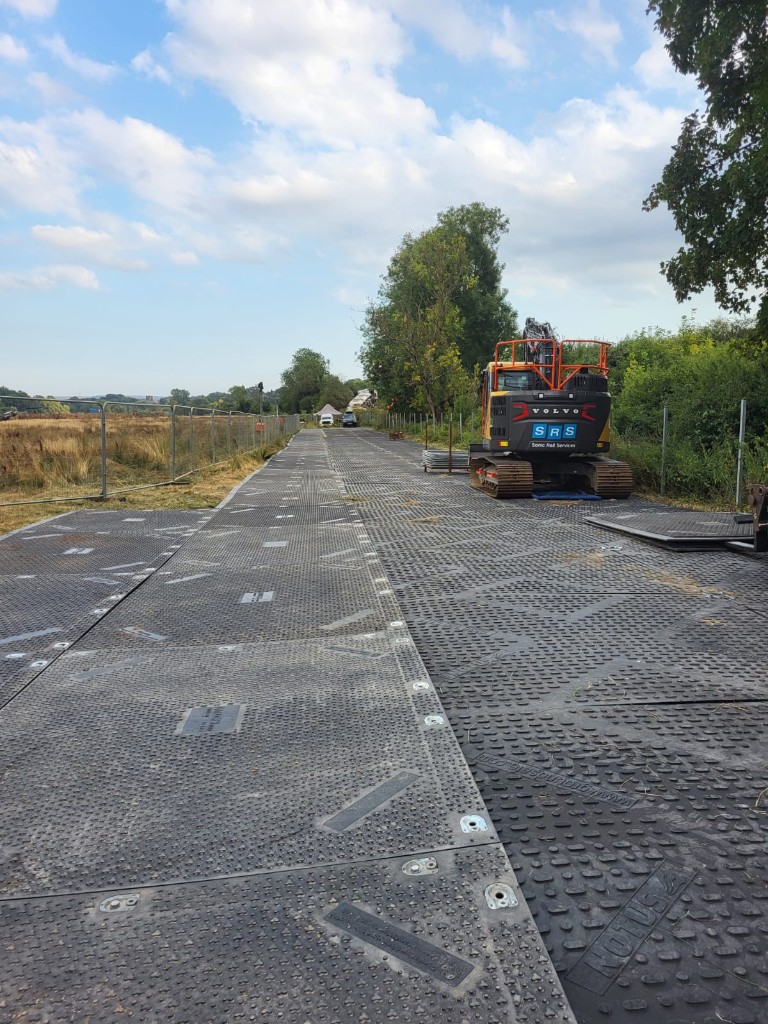
That rapid-response mobilisation is typical of the time-critical projects Notus Ground Safe supports across the UK — from infrastructure programmes to emergency access requirements where site teams cannot wait for lengthy lead-in planning. On a confined railway site, with emergency services, Network Rail engineers and heavy plant converging on a limited footprint, getting suitable access in quickly matters. Delays in establishing safe access can hold up the wider recovery sequence.
Our crews arrived ready to install the temporary access and ground protection the site needed, working alongside the wider industry response rather than directing it.
Before anything else could start, two jobs had to happen: building a stable, load-bearing access road capable of carrying cranes and recovery vehicles, and constructing a working compound where those vehicles could be safely marshalled, loaded and staged.
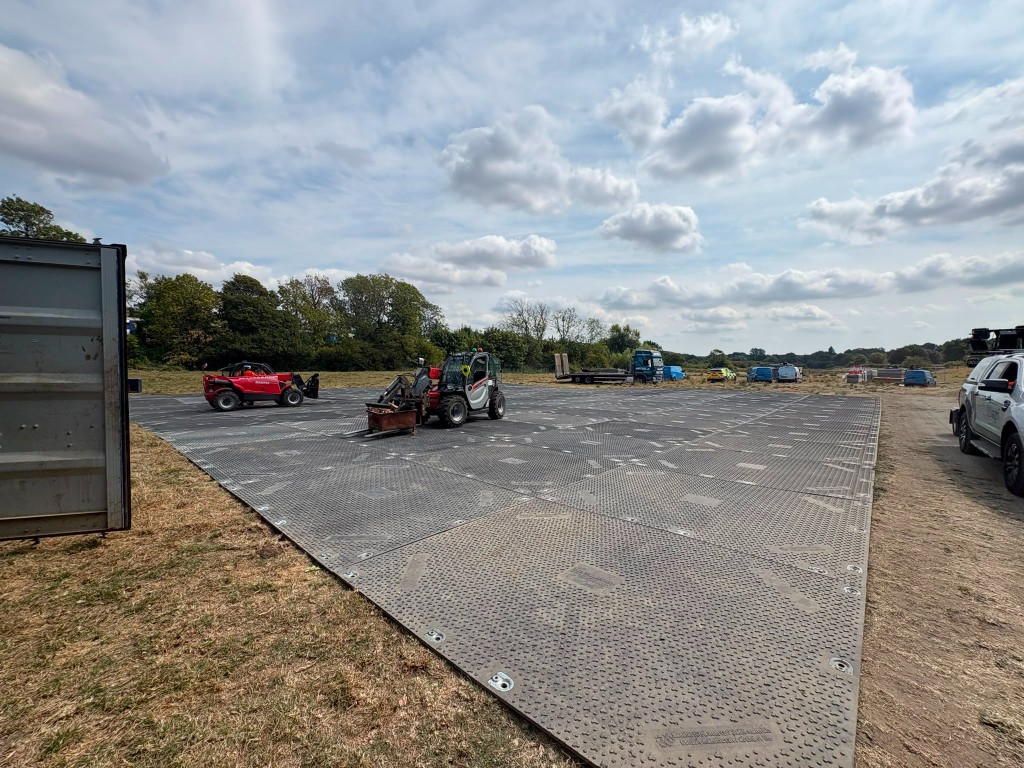
Working an embankment site next to live railway infrastructure, with emergency services, Network Rail engineers and heavy plant all converging on a confined footprint, is exactly the kind of environment ground protection exists for. Get the access wrong and everything downstream — crane positioning, carriage lifts, the timeline for reopening the line — slips with it. Get it right, and it barely gets mentioned, because the recovery just proceeds.
Using trackway panels, the team created the temporary access road and compound the recovery operation required. The installation gave specialist recovery teams solid, reliable ground to work from in a location without suitable hardstanding — a load-bearing platform for heavy plant access where none existed before.
What stood out on this job was not just the speed of the response — it was how many organisations pulled the same direction at once. Contractors, suppliers, plant operators and site teams from across the industry converged on Lewes within hours of the incident, each handling a different piece of the puzzle, with no time for the usual lead-in planning that a job like this would normally get.
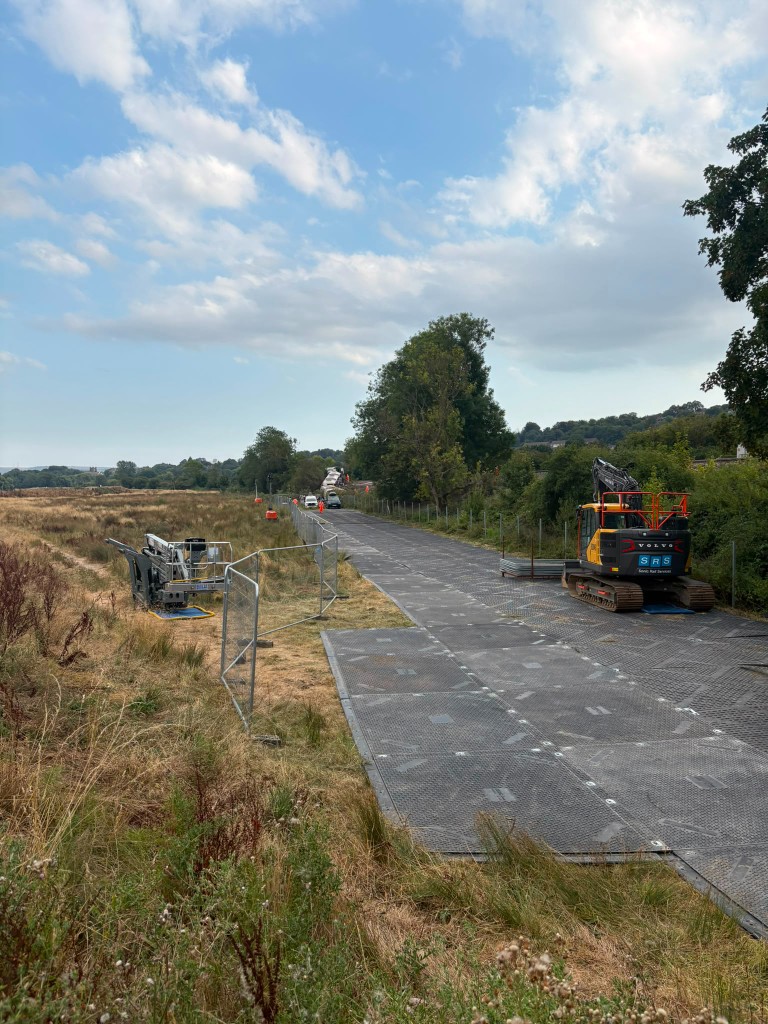
That kind of coordination does not happen by accident. It happens because everyone involved understood the brief immediately: get the infrastructure in, safely, so the people whose job is recovering the train and reopening the railway can get on with it. Ground protection and temporary access sit at the front of that queue. Without them, cranes and recovery vehicles cannot reach the workface; without a working compound, the site cannot support the volume of plant and personnel a major rail incident demands.
Notus Ground Safe's contribution was one part of that wider mobilisation — providing the access layer that let heavy recovery work proceed on ground that could bear it.
Effective temporary access often becomes almost invisible when it works. The access road is in, the compound is laid, and downstream operations simply proceed. Crane teams position their equipment. Recovery vehicles can move along a defined load-bearing route. Site traffic flows on a surface designed for the loads it will carry.
That is what ground protection is really for on jobs like this. It is easy to think of trackway and access solutions as a background item on a site plan — useful, but not central. Incidents like the Lewes derailment show the other side: when something goes seriously wrong, being able to get heavy plant onto awkward ground quickly, safely and reliably is often the thing that determines how fast a wider recovery can even begin.
By the time the access road was complete, it had done exactly that: given the specialist recovery teams solid, reliable ground to work from, in a location that had none.
The access road and working compound are in and doing their job, but the recovery itself is far from over. The coming weeks involve the complex, carefully sequenced work of lifting the derailed carriages clear, inspecting and repairing the track and embankment, and working toward reopening the line. That specialist heavy-recovery and railway repair work sits well outside Notus Ground Safe's scope — but it is work the access and compound now support.
Network Rail's initial assessment that the line would remain closed for at least ten days underscored the scale of what remained after access was established. Our role was to put the ground protection and temporary access in place so that work could move forward; the carriage recovery and permanent railway repair are led by the specialist teams responsible for those disciplines.
Need rapid-response ground protection or temporary access?
Notus Ground Safe provides temporary access and ground protection solutions for infrastructure, construction and time-critical projects across the UK — including temporary roadways, ground protection mats hire and trackway hire for heavy plant, crane access and working compounds on challenging sites.
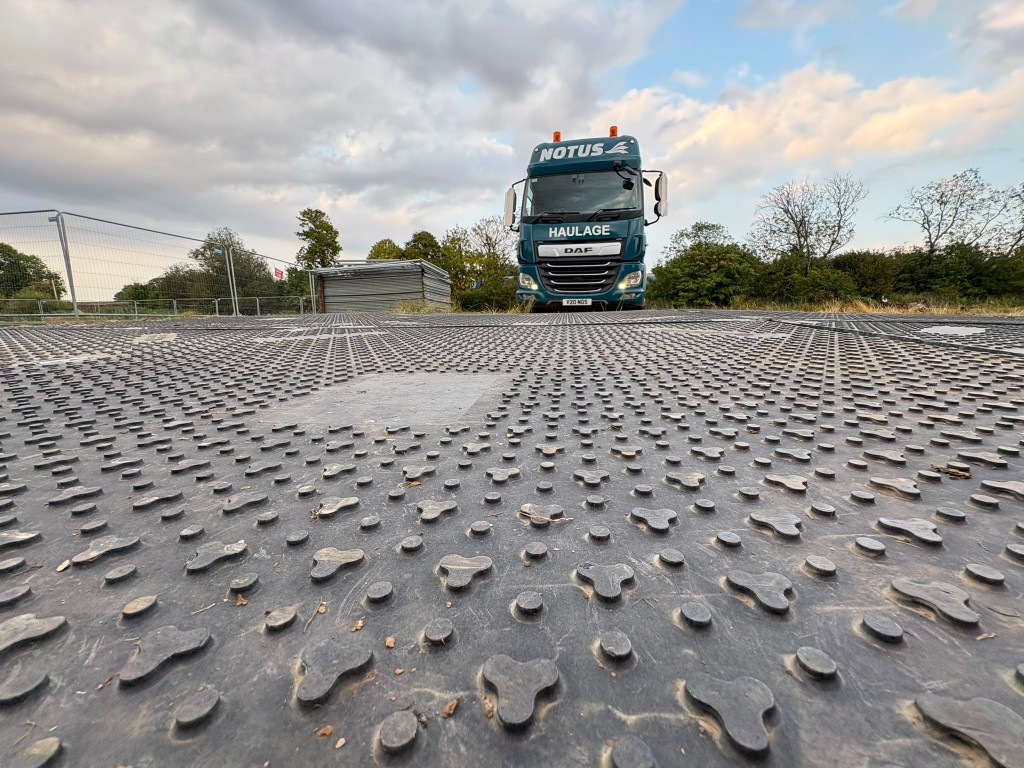
For rail infrastructure, utilities and emergency access programmes, we mobilise crews and equipment to deliver load-bearing temporary access where standard ground cannot support the work. Free site surveys help establish the right ground protection approach before panels go down — particularly valuable on confined or time-critical sites where access routes and compound layouts need to be right first time.
For the team involved at Lewes, it was a simple brief in the end: get the call, get the crew together, get the job done. No fanfare — just the access road and working compound that let everyone else do theirs.
Sources: BBC News, ITV News, CNN, and Network Rail Media Centre reporting on the 13 August 2026 Lewes derailment.