tel: +44 (0)330 100 0377
How Notus Ground Safe delivered 2,500 metres of heavy-duty temporary access roadway in a single week: keeping one of Britain's most important infrastructure programmes on track.
East West Rail (EWR) is one of Britain's most consequential infrastructure projects in a generation. The full route will connect Oxford, Milton Keynes, Bedford, and Cambridge with a direct rail link, restoring and building new railway across a corridor that today forces many travellers to route via London, adding hours to short cross-country journeys.
The Oxford–Cambridge corridor contributes around £143 billion to the national economy each year and supports approximately two million jobs, many in high-skill, knowledge-intensive industries. Yet east–west transport links remain poor. East West Rail is designed to change that and, in doing so, is expected to unlock £6.7 billion in regional economic growth by 2050, enable up to 100,000 new homes, and cement the region's reputation as Europe's answer to Silicon Valley.
Delivering that ambition depends entirely on what happens underground first. Before a single metre of permanent track can be laid, engineers must build a detailed picture of the ground: its composition, strength, water table, and hidden risks. This is the critical phase of ground investigation (GI), and it is exactly where trackway hire UK services become essential for project momentum.
Ground investigation work sits at the invisible foundation of every major infrastructure project. It is unglamorous, rarely photographed, and almost never written about in the press: but it is arguably the most consequential phase of the entire programme. For East West Rail, the Cambridge corridor presented a particular set of geological challenges that made ground protection mats hire a non-negotiable requirement.
The terrain across this stretch of eastern England is characterised by low-lying fenland, soft alluvial soils, and seasonally high groundwater. Geologically, the route traverses Oxford Clay and Gault Clay, often capped with river terrace gravels and progressively more chalk towards the east. These materials, while common, are notoriously difficult for heavy machinery when wet, prone to deep rutting and significant stability issues.
The project faced a multifaceted logistical hurdle. There are no existing roads to most of the investigation sites, and the ground cannot support heavy plant without intervention. Furthermore, the investigation programme must move quickly, as EWR Co works towards a Development Consent Order (DCO) application where every week of delay has significant consequences for design and planning.
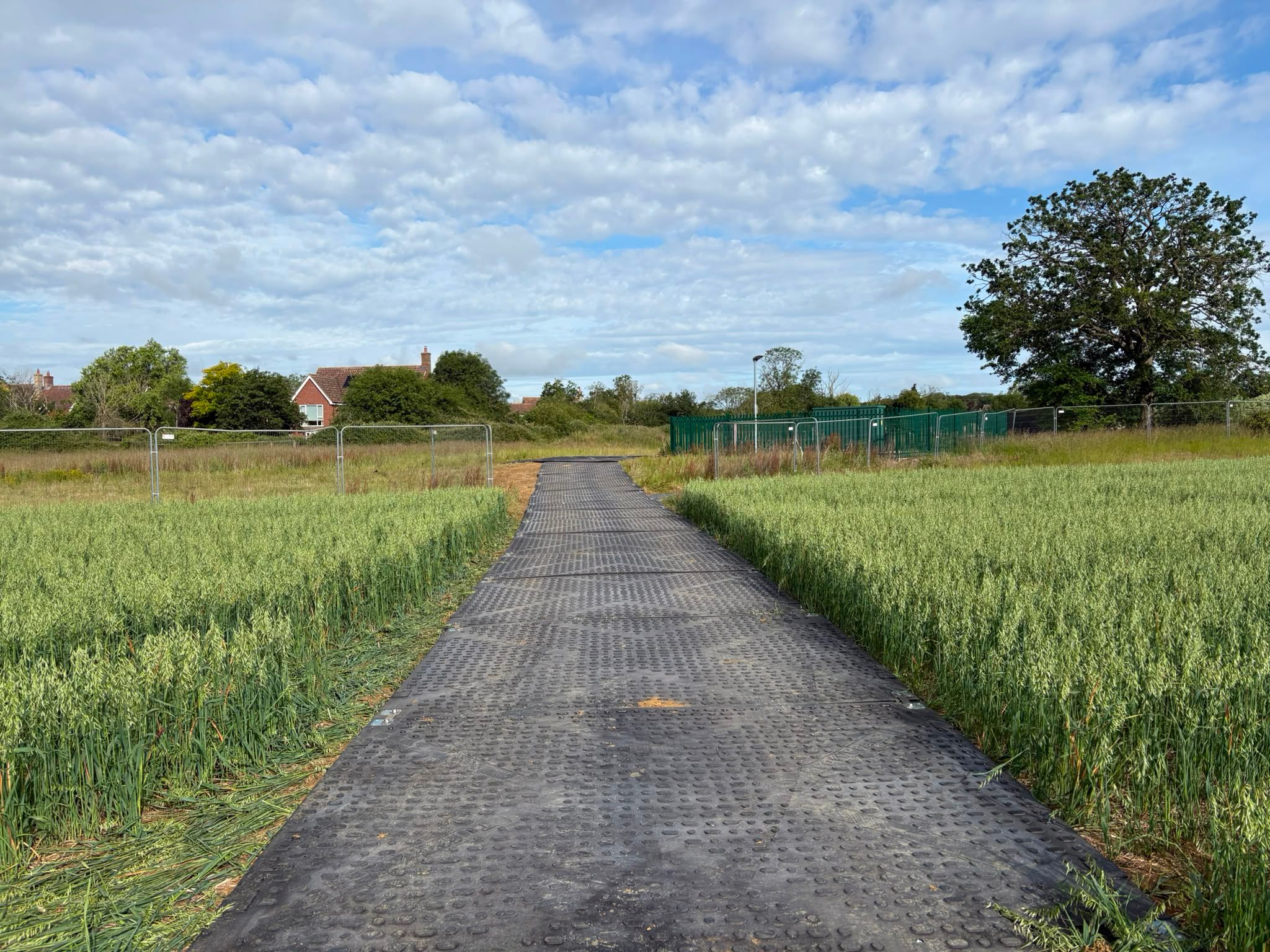
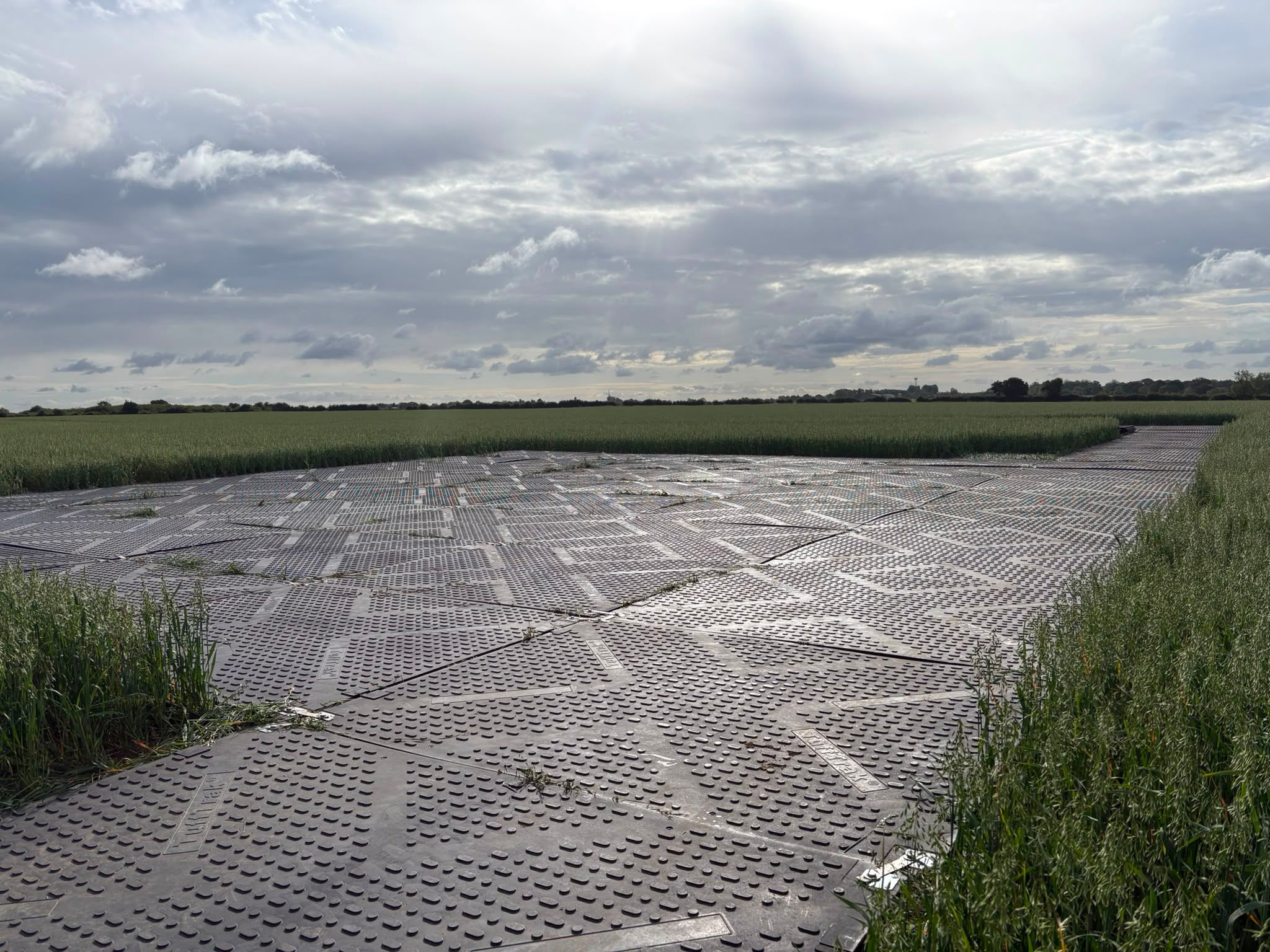
To overcome these obstacles, Notus Ground Safe deployed the Notus HD system. This heavy duty ground protection mats solution was selected specifically for its ability to provide immediate load-bearing performance on the softest fenland ground without the need for excavation or imported stone.
The primary goal of the GI phase was to establish borehole locations across multiple remote sites simultaneously to:
To achieve this, drilling rigs, welfare units, and support vehicles needed access to sites that had often never seen a vehicle heavier than a tractor. Our temporary access roads hire service provided the robust "floating" platform required to keep these rigs moving, regardless of the weather.
Installing over 2,500 linear metres of heavy-duty temporary roadway in a single week required precise planning and experienced installation crews. Notus Ground Safe mobilised rapidly, coordinating access agreements with landowners and sequencing installation to align with the drilling schedule.
Routes were planned to minimise disruption to field drainage systems and protect hedgerows and field boundaries. As investigation priorities evolved, roadway sections were lifted, relocated, and reinstated without significant programme impact. This level of flexibility is why many top-tier contractors choose Notus for construction site access mats.
Ground investigation programmes operate on extremely tight timelines. Drilling rigs are hired by the week, laboratory analysis timescales are fixed, and collected data feeds directly into multi-billion-pound design programmes. Any delay to site access creates a cascading effect. By delivering the full access network ahead of schedule, Notus Ground Safe enabled investigation teams to focus on collecting data rather than managing bogged-down vehicles.
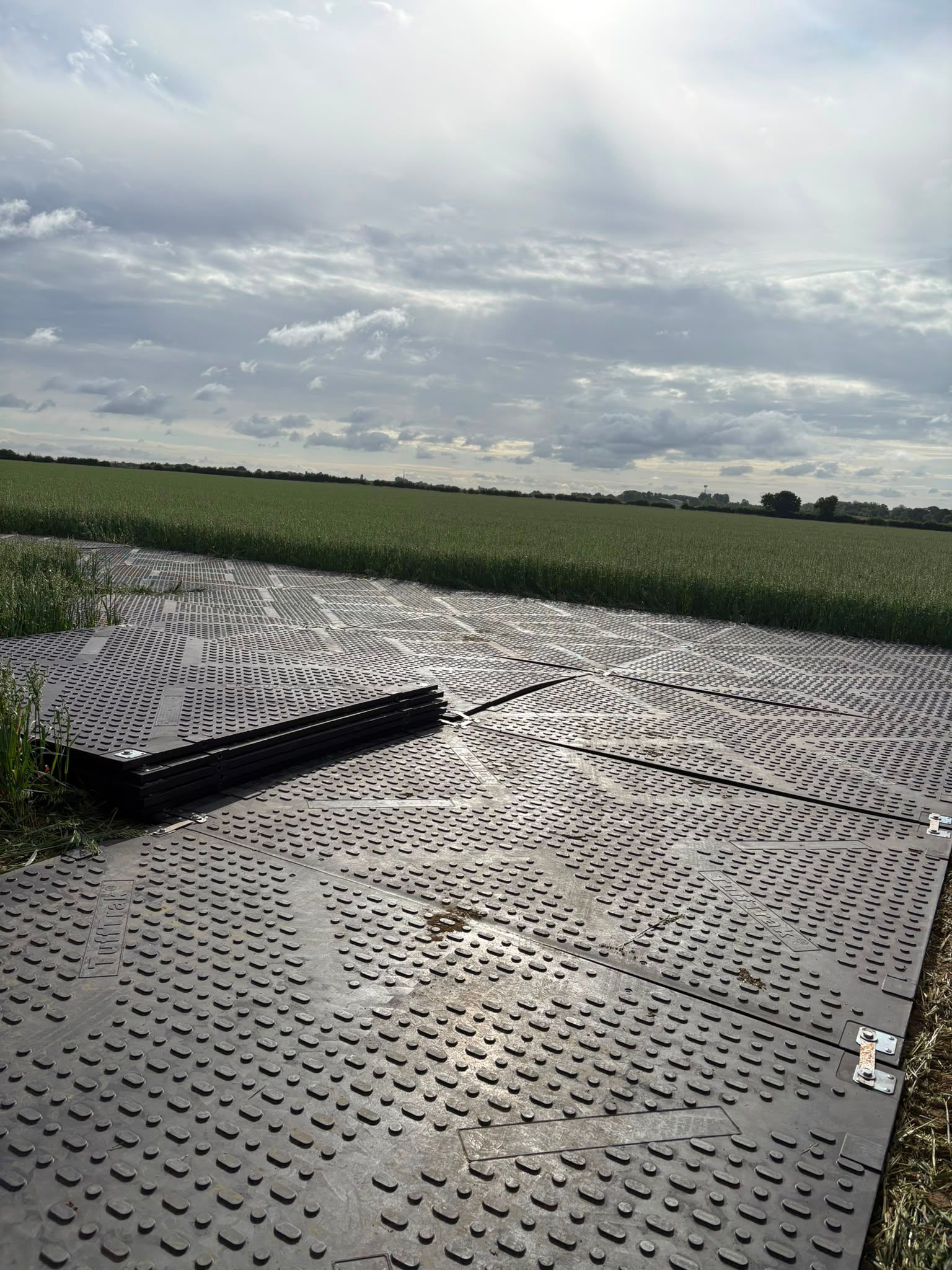
The Notus HD system is more than just a surface; it is a high-performance engineering tool designed for the rigours of modern industries like rail and utilities.
The system supports vehicles and equipment exceeding 150 tonnes, subject to ground conditions. Drilling rigs, crane-mounted units, and heavy fuel bowsers can all operate safely on routes where the underlying ground would otherwise prevent any form of access.
Unlike aggregate (stone) roadways that require excavation, geofabric layers, and compaction settlement time, Notus HD panels provide full load-bearing performance immediately after installation. This "plug-and-play" approach is vital for the fast-paced GI phase of a project.
The panel system distributes loads across its full surface area, preventing point loading and protecting the soil structure beneath. This is particularly important on sensitive agricultural land where soil compaction can ruin crop yields for years to come.
Safety is paramount in rail infrastructure. The textured surface of our mats provides reliable grip for wheeled vehicles, tracked plant, and pedestrians in wet and muddy conditions, helping maintain a safe working environment.
In line with our commitment to sustainability, the Notus HD system eliminates the need for imported aggregate. This significantly reduces HGV movements on rural roads: lowering the carbon footprint of the project: and ensures the panels are 100% recyclable at the end of their long service life.
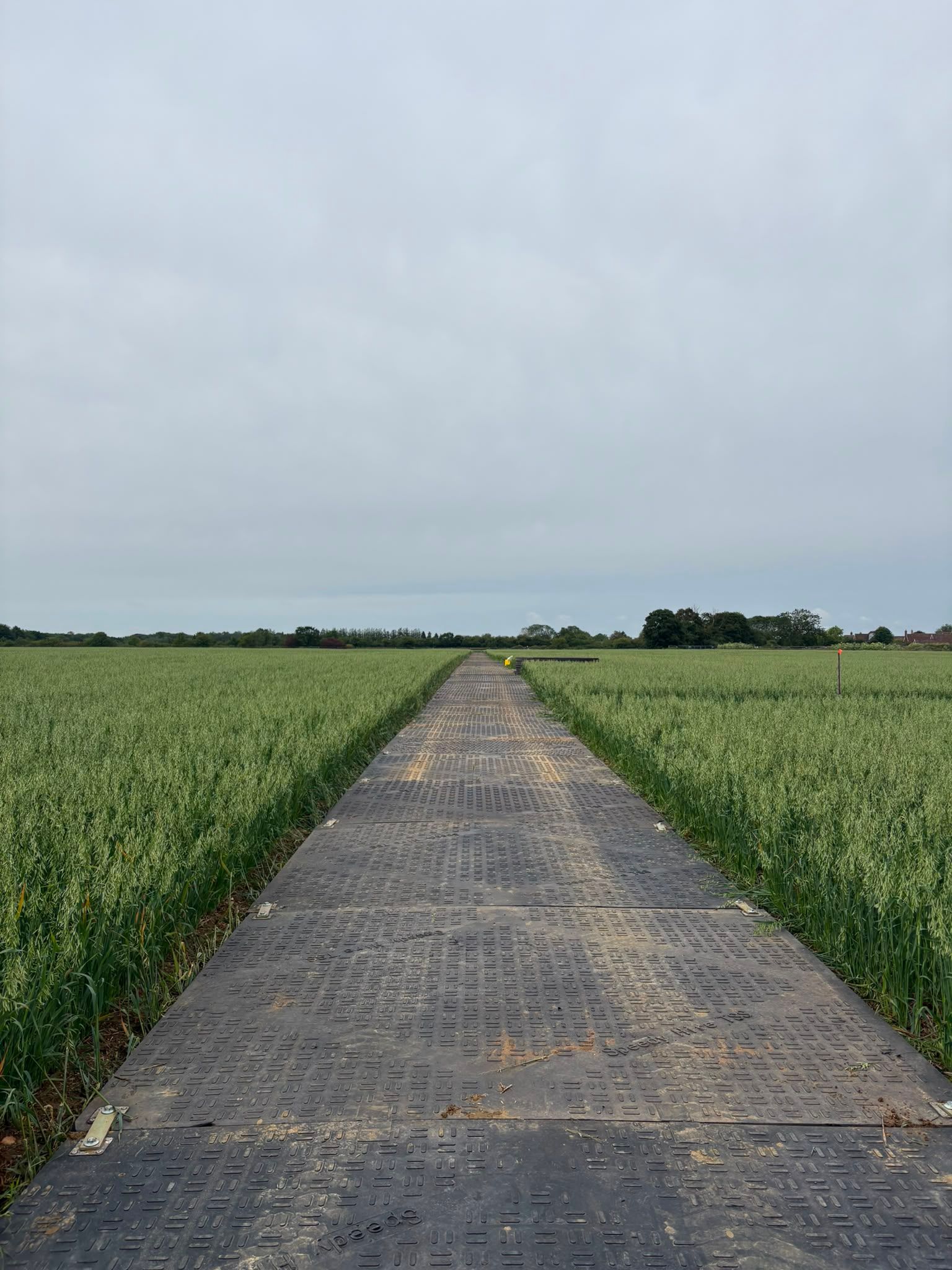
The data collected during ground investigations directly influences the cost, safety, and feasibility of every subsequent stage of infrastructure delivery. Without reliable data, designers must assume worst-case ground conditions and engineer accordingly. This often results in unnecessarily deep foundations, heavier embankments, larger structures, and more expensive drainage systems.
With accurate GI information, engineers can optimise designs based on actual conditions, potentially saving hundreds of millions of pounds on projects of this scale. The Cambridge corridor's geology is particularly complex, with soft peat and alluvial clay overlying denser chalk and gravel. Accurate data ensures that features like the 12-metre-deep cuttings at Chapel Hill are engineered for maximum stability and minimum risk.
"By understanding the ground conditions thoroughly, we can design the railway to be cheaper to build, so we spend less taxpayers' money on construction. And partly it's a risk management exercise. If we understand what's here, then we're reducing the risk that we need to deal with during the construction phase."
:
"Notus Ground Safe is proud to support this important phase of the East West Rail project by providing safe, efficient, and sustainable access solutions. Projects like this remind us that the right access, delivered at the right time, is what keeps the UK's infrastructure moving."
Project DetailInformationProjectEast West Rail Ground Investigation WorksLocationCambridge Corridor, Eastern EnglandSectorRail InfrastructureProgramme StagePre-DCO Ground Investigation PhaseSolutionTemporary Heavy-Duty Access RoadwayProductNotus HD Heavy-Duty Roadway SystemQuantity InstalledOver 2,500 Linear MetresInstallation Period1 WeekGround ConditionsSoft alluvial fenland soils with seasonally high groundwaterEnvironmental BenefitZero excavation, zero aggregate import, 100% recyclable panels